Dreamdream · Educational software · South Korea
We build educational software that helps children develop the skills the AI era demands.
When AI can produce an answer in seconds, what matters most is a child’s ability to think independently, to use AI feedback to improve their own work, and to create together with others. Dreamdream builds classroom software, designed by a practicing elementary school teacher, that trains exactly these abilities.
- live products
- 14
- page views in the last 5 weeks
- 37K+
- products shipped in 4 weeks
- 12
- commits, built with Claude Code
- 1.5K+
- curriculum questions in our shared bank
- 25K+
Page views: Vercel Web Analytics, sum across products, Sep 1 – Oct 7, 2026 (analytics enabled in September 2026). Question bank count as of Oct 8, 2026. Every product is free for individual teachers and students.
Why we exist
Korean elementary teachers teach every subject to the same class all day. After each unit they hunt for review problems, mark every student’s spelling and spacing by hand, and rebuild seasonal lessons every year — time that does not go into helping children think.
At the same time, AI has changed what school must teach. When an answer is one prompt away, children need strong foundations, the habit of improving their own work with AI feedback instead of copying it, and the experience of creating with others.
Dreamdream turns that into software teachers can use the next morning: focused tools that follow the textbook unit by unit, open from a single link on a school tablet, and fit one 40-minute period.
What we build
14 live products, grouped by the ability each one trains. Interfaces are in Korean; every card opens the live product.
Solid foundations
Using AI well starts with being able to think on your own. Students master curriculum concepts through generated practice and review games until they truly own them.
 수학왕Math KingMastery-based math review aligned with the 2022 national curriculum: 69 units for grades 1–6, endlessly generated practice, mastery checks and unit tests.
 한자학교Hanja SchoolChinese characters used in Korean, in 15 official levels, with stroke-order animation, character structure and memory tips.
 따라쓰기Trace & WriteHangul handwriting practice on manuscript paper. Students trace model characters with a finger; well-formed characters are graded and stamped.
 수학 배틀 아레나Math Battle ArenaReal-time math battles on the classroom TV. Students join by QR code, and every correct answer damages the other team’s monster.
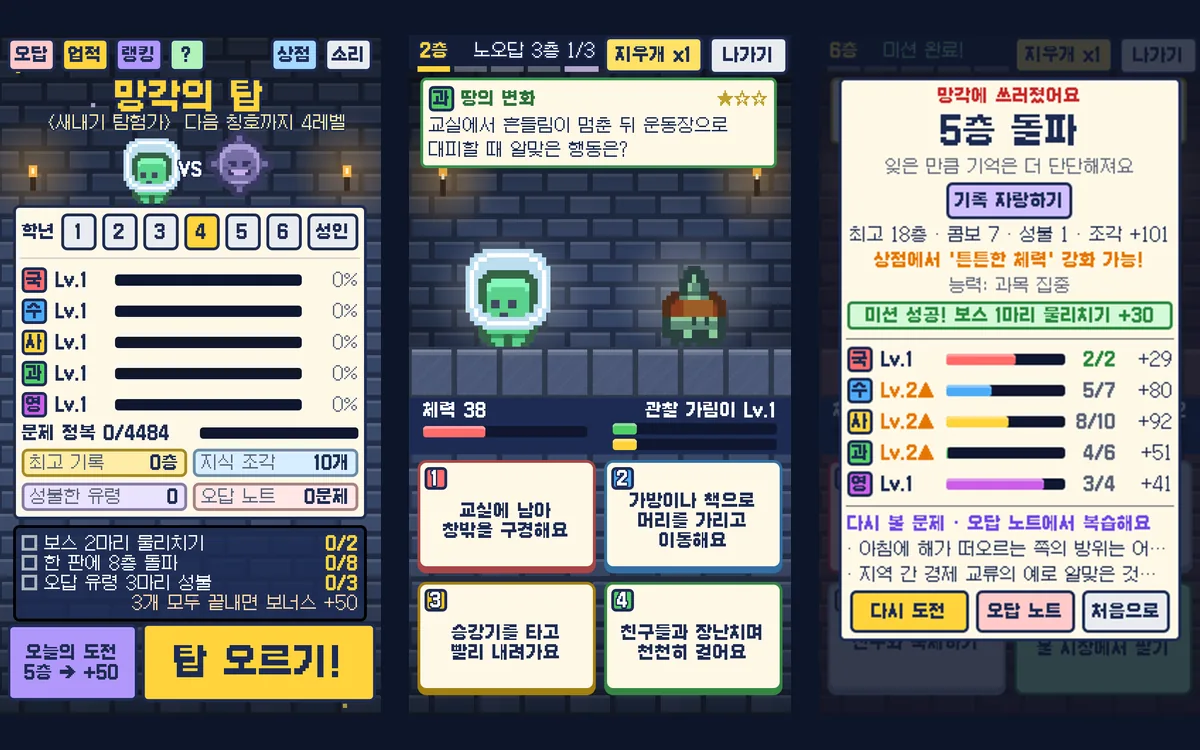 망각의 탑Tower of ForgettingA pixel-art roguelike where students climb a tower by answering review questions in five subjects. Missed questions return as ghosts to be solved again.
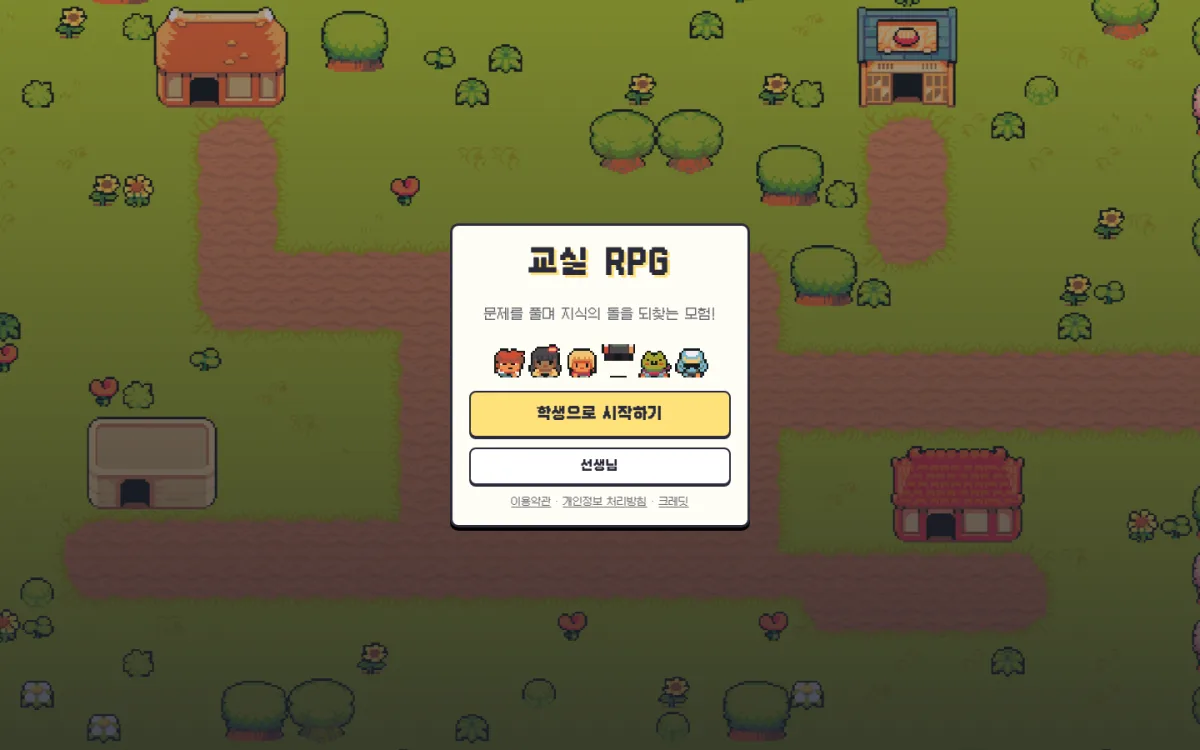
- 교실 RPGClassroom RPGA pixel-art adventure for grades 3–6 where every monster battle is a review question in Korean, math, social studies, science or English.
Thinking with AI
AI never does the work for the student. Children read AI feedback and revise their own writing, and read AI-written news critically, checking sources and facts.
 다듬DadeumA class writing notebook. Students get one round of AI feedback on spelling, spacing and structure, then must revise the text themselves before submitting.
 뉴스교실News ClassroomEvery Monday, last week’s news as easy articles at two reading levels, with quizzes, a glossary, worksheets and a classroom mode.
 책달BookmoonA monthly reading magazine for grades 3–6: 144 pages and about 40 stories across eight sections in every issue.
Creating and experiencing together
We bring collaboration and hands-on experience into the classroom: every student contributes one piece to a shared artwork, folds paper by hand, and explores Korean holiday culture interactively.
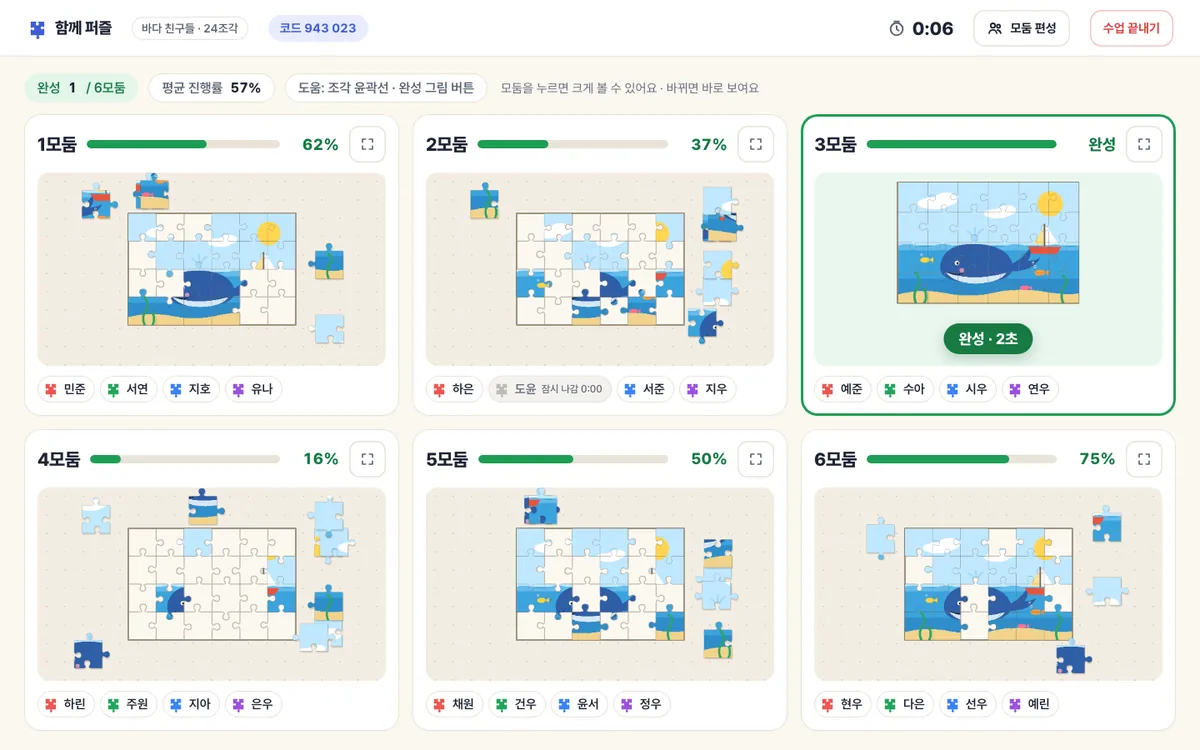 함께 퍼즐Puzzle TogetherFour to six students solve one jigsaw puzzle together in real time, each on their own device. Pieces are shared out, so everyone has to take part.
 협동화 만들기Group CanvasSplits any picture into printable A4 pieces so every student paints one part of a shared class artwork.
 한칸한칸Hankan HankanTurns a sentence or a famous painting into A4 coloring sheets that students color one by one and join into a wall-sized mural.
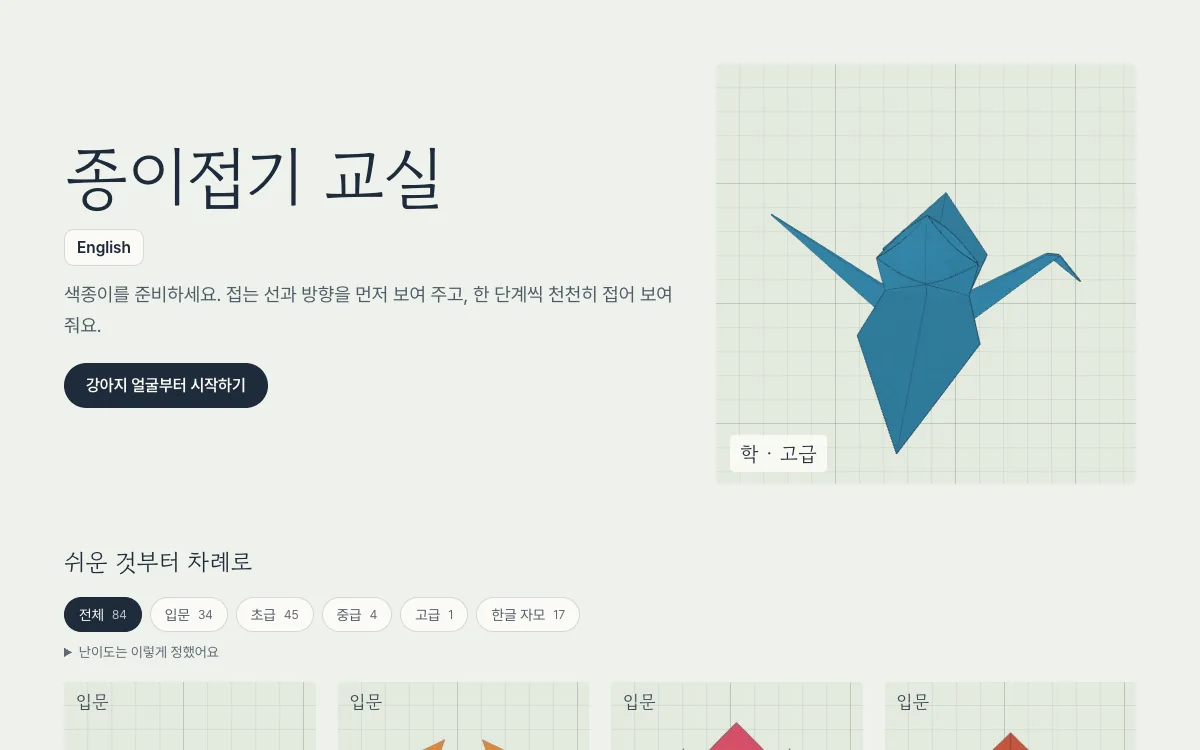 종이접기 교실Origami Classroom67 origami models and 17 Hangul letters taught step by step in 3D, with fold lines and direction arrows shown before each fold.
 한가위 달마을Hangawi Moon VillageAn interactive Chuseok lesson: students visit six village spots with a moon rabbit to learn the holiday’s origins, customs, games and food.
How we use Claude
Claude is how a teacher-founded company ships and operates more than a dozen classroom products.
- 01
Every product is built with Claude Code
A teacher-founder designs, builds and maintains the entire suite with Claude Code: curriculum-aligned problem generators, a 3D origami engine, real-time multiplayer games and a writing platform with teacher dashboards. Since September 12, 2026 we have shipped 12 new products in four weeks, with more than 1,500 commits across our repositories.
- 02
A weekly news pipeline on Claude
Every week a scheduled Claude routine clusters stories that many outlets reported, writes child-friendly articles at two reading levels with quizzes and glossaries, and passes each article to a separate verifier agent that rechecks facts, vocabulary level and answer keys. Issues that fail automated checks are not published.
- 03
A monthly magazine drafted with Claude
Each Bookmoon issue is researched and drafted with Claude through a monthly routine, then reviewed by a person for facts and age-appropriate language before it reaches students.
Inside the weekly News Classroom pipeline
A scheduled Claude routine (Claude Opus) runs every Monday. Three of the six steps are Claude agents; every step leaves a file that the next step checks.
- Step 1Code
Collect
Headlines from major Korean outlets every 10 minutes, plus a children's newspaper.
- Step 2Claude
Classify
Claude groups the week's stories, drops non-news, and rates each one for safety, educational value and everyday relevance.
- Step 3Code
Select
A scoring formula (60% coverage, 25% education, 15% daily life) picks four main topics and one heartwarming story.
- Step 4Claude
Write
A Claude writer agent drafts each article at two reading levels, with quizzes, a glossary and discussion questions.
- Step 5Claude
Verify
A separate Claude verifier agent checks each draft against news summaries. Sensitive topics get a second, independent safety review. Failures are rewritten once or replaced.
- Step 6Code + human
Publish & review
Automated checks assemble the issue, it deploys, and the operator reviews it right after release, fixing or removing problems.
How these run today. All of the Claude work on this page runs on a paid Claude subscription: Claude Code for development, and routines in the Claude desktop app for the news and magazine pipelines. Claude never receives student personal data. Dadeum, our student writing-feedback tool, currently uses an OpenAI model.
AI safety and child protection
Most of our users are elementary school students. These rules apply everywhere AI is used. Read the full policy.
AI is always disclosed
AI feedback is labeled as AI and kept separate from teacher comments. AI-assisted articles and stories say so on the page. AI never poses as a person.
No open-ended chat for children
There is no chatbot. Students meet AI only as structured writing feedback in Dadeum — one round per text, three per day, inside a class run by their teacher, who sees everything.
Verified before it reaches a child
Generated content passes a separate verification step and automated checks before publication, with extra safety review for sensitive topics. Bookmoon is reviewed by a person before release; News Classroom is reviewed by the operator right after each automated release, with immediate fixes or takedown.
AI supports learning, never replaces it
AI points out what to fix and why. Students must revise the work themselves before they can submit it.
Child privacy by design
We comply with Korea’s Personal Information Protection Act. Data of children under 14 is processed only with guardian or school consent; most tools need no login and keep progress on the device.
Korea only
gyosil.app is a Korean-language service for schools and families in the Republic of Korea, operated under Korean law. It is not directed at children in other countries.
Milestones
2024.12
First product, Group Canvas, launched
2025.04
Hanja School launched
2026.09
Math King, Dadeum, Classroom RPG, Hangawi Moon Village and Trace & Write launched; suite unified under gyosil.app
2026.09
News Classroom (weekly) and Bookmoon (monthly) begin publishing through Claude-based content pipelines
2026.10
Math Battle Arena, Hankan Hankan, Tower of Forgetting, Origami Classroom and Puzzle Together launched; single sign-on added
Company
Dreamdream is a Korean sole proprietorship founded by 장진수, a practicing elementary school teacher. Every product is designed from the founder’s own classroom needs and refined with feedback from teachers who use it.
Business model
Free for individual teachers and students, and it will stay that way. Ads on teacher-facing pages cover part of our operating costs today; screens that students use show no ads. We are preparing a paid plan for schools and education offices, with school-wide class management and learning insights.
- Legal name
- Dreamdream (드림드림), sole proprietorship
- Founder & CEO
- 장진수
- Business reg. no.
- 706-61-00813 (Republic of Korea)
- Address
- 179 Jwaya-ro, Haeryong-myeon, Suncheon-si, Jeollanam-do, Republic of Korea
- Product
- gyosil.app
- Contact
- jinsyu@gyosil.app
Get in touch
Schools, partners and press: email us. We reply within three business days.
jinsyu@gyosil.app